Trotzdem küsse ich deine Nasenspitze
(Still, I Kiss the Tip of Your Nose)
An artistic project on the independent lesbian and women’s movement in the GDR at the Elisabeth Selbert House, Berlin (Unter den Linden) in two parts
– dedicated to the courage and perseverance of all the women involved, whose remarkable actions irreversibly changed their own lives and who were not rarely subjected to imprisonment, state surveillance, and exile.
And to Petra Leonhardt, one strong woman, who is no longer here.
Invited Art in Architecture competition of the German Bundestag, 1st Prize, implementation period: 2027–2028
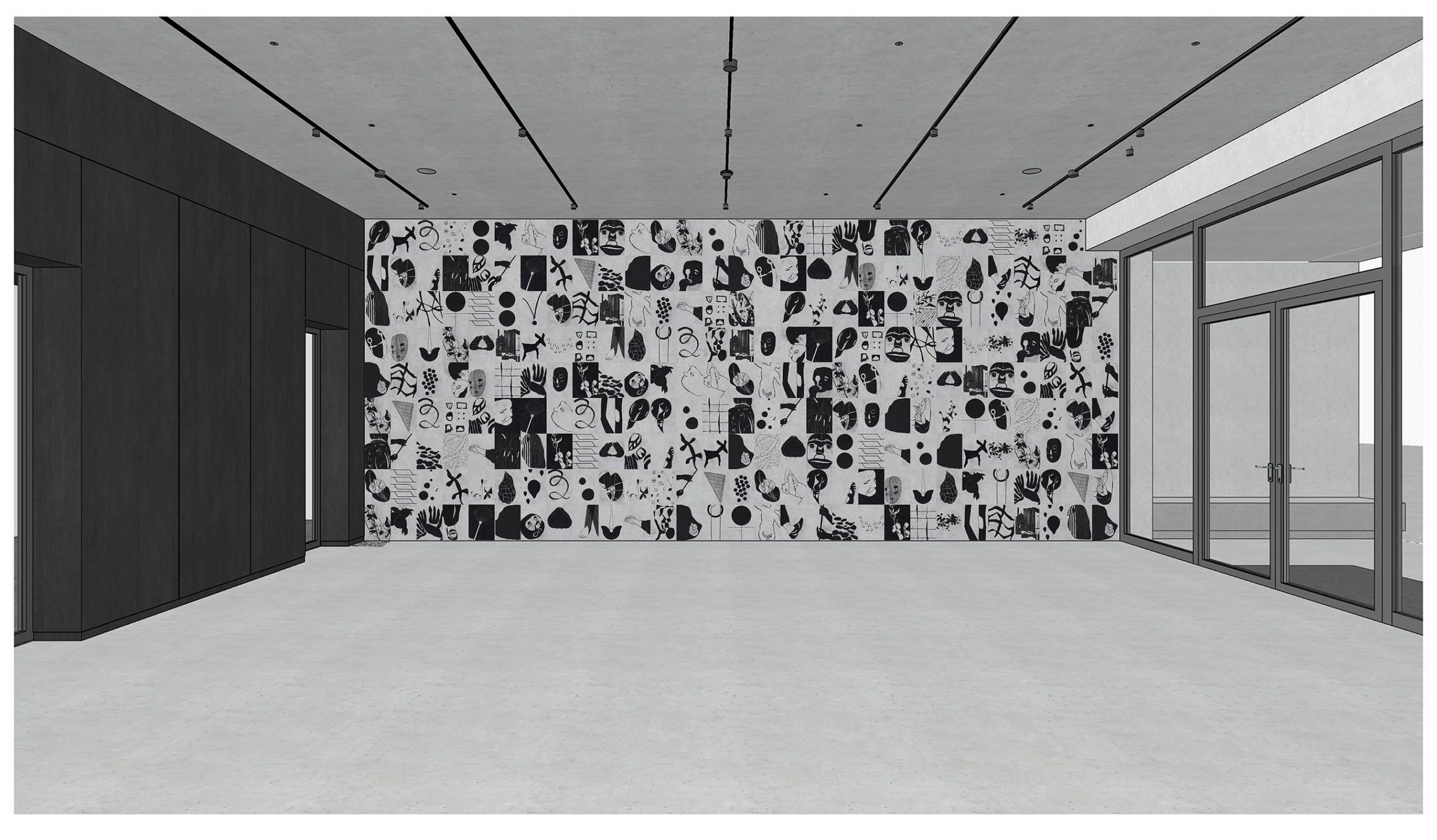
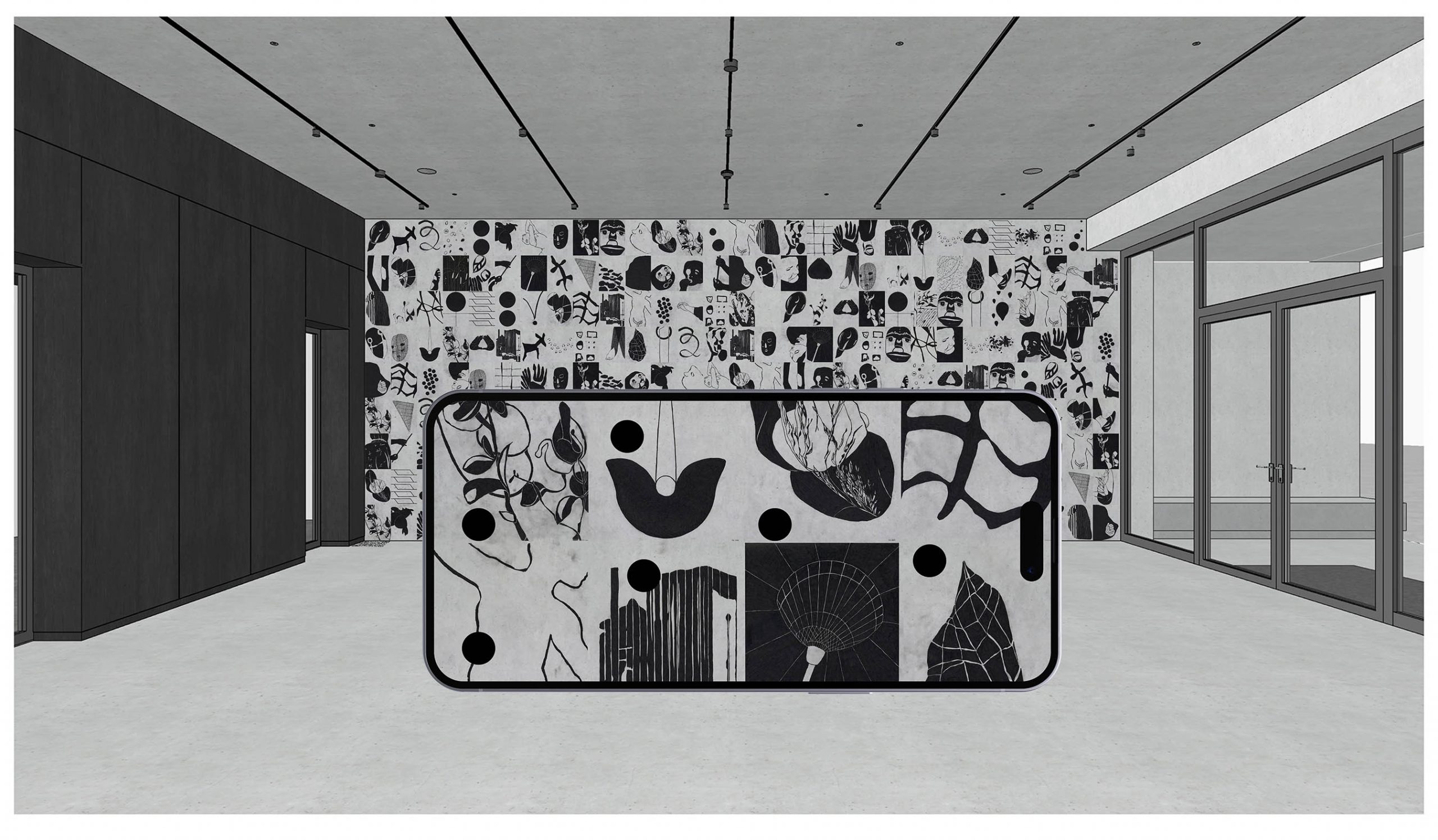
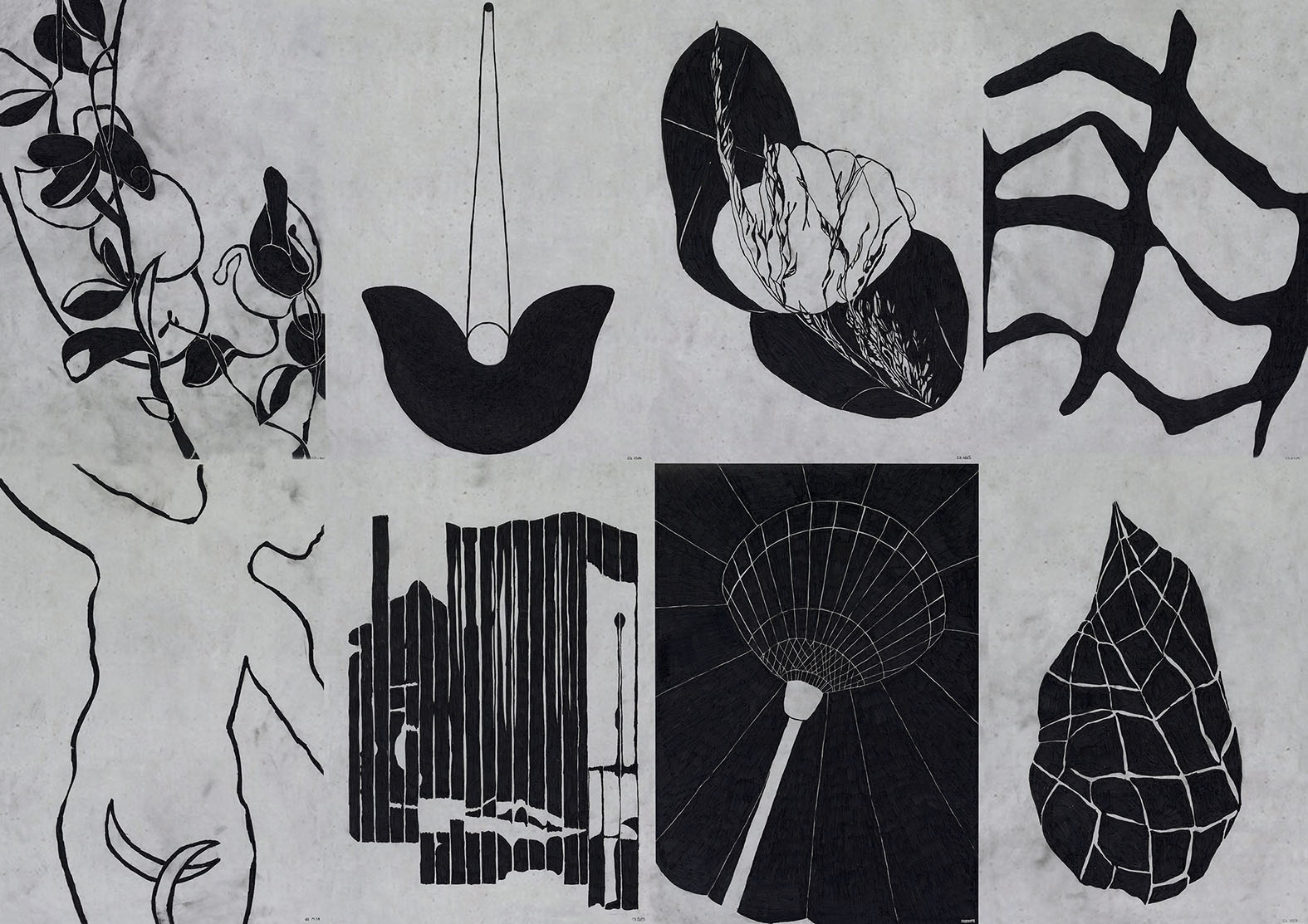
My work Still, I Kiss the Tip of Your Nose at the Elisabeth Selbert House consists of two parts: a wall drawing extending across the entire foyer wall, and an accompanying online publication (website), specifically programmed and designed for this purpose. This publication will convey the research behind the artistic work by revealing to viewers, through AI-based image recognition, the stories embedded in the drawings. When scanning the wall with a mobile device, archival materials and quotations from the GrauZone holdings of the Archive of the GDR Opposition at the Robert Havemann Gesellschaft in Berlin appear.
In this work, I explore the independent women’s movement in the GDR. Its various groups were among those who helped prepare the ground for the Monday demonstrations in the autumn of 1989, laying an essential foundation for the reunification of Germany.
From the late 1970s onward, women’s and lesbian groups formed across the GDR. Through often remarkable actions — inside and outside the churches, at home and in the streets — they persistently resisted state repression and raised their voices for peace and freedom.
The diverse content of their demands remains relevant today. Their ways of coming together still resonate — in their social approaches and forms of expression, which were often closely bound to their own lives.
For example, in response to the new military service law that sought to compel women into the armed forces, the highly active group Women for Peace emerged in East Berlin. And as a reaction to militarised school education, a non-state-run children’s daycare was founded in Prenzlauer Berg.
The title of the work is also inspired by one of these extraordinary women. It is taken from a letter a woman wrote to her partner from a psychiatric institution, where she had been forcibly admitted because of her homosexuality. Amid descriptions of a brutal everyday life and inhumane treatment, she writes with an almost disarming lightness: Still, I kiss the tip of your nose.
As this body of work enters the Elisabeth Selbert House, one of many marginalised histories is brought into a prominent space — histories from which we can and must learn, in resonance with that of the building’s namesake.
Inspired by Elisabeth Selbert’s biography, I became interested in how legislation affecting women in the GDR changed after the division of Germany became increasingly concrete in 1949. From there, my research led me through the Archive of the German Women’s Movement to the history of the independent women’s movement in the GDR — and in particular to the GrauZone collection.
Initiated in 1988 by a group of committed women, the archive was gradually expanded after 1989, as more and more women active in women’s groups entrusted their materials to it.
The project understands itself as one that draws attention to the ongoing marginalisation of various peripheral groups — and thus also of their histories. In the field of art as well, we are still far from the equality that Elisabeth Selbert once advocated. For this reason, only FLINTA* individuals are commissioned for the collaboration, from the programmer to the type designer.
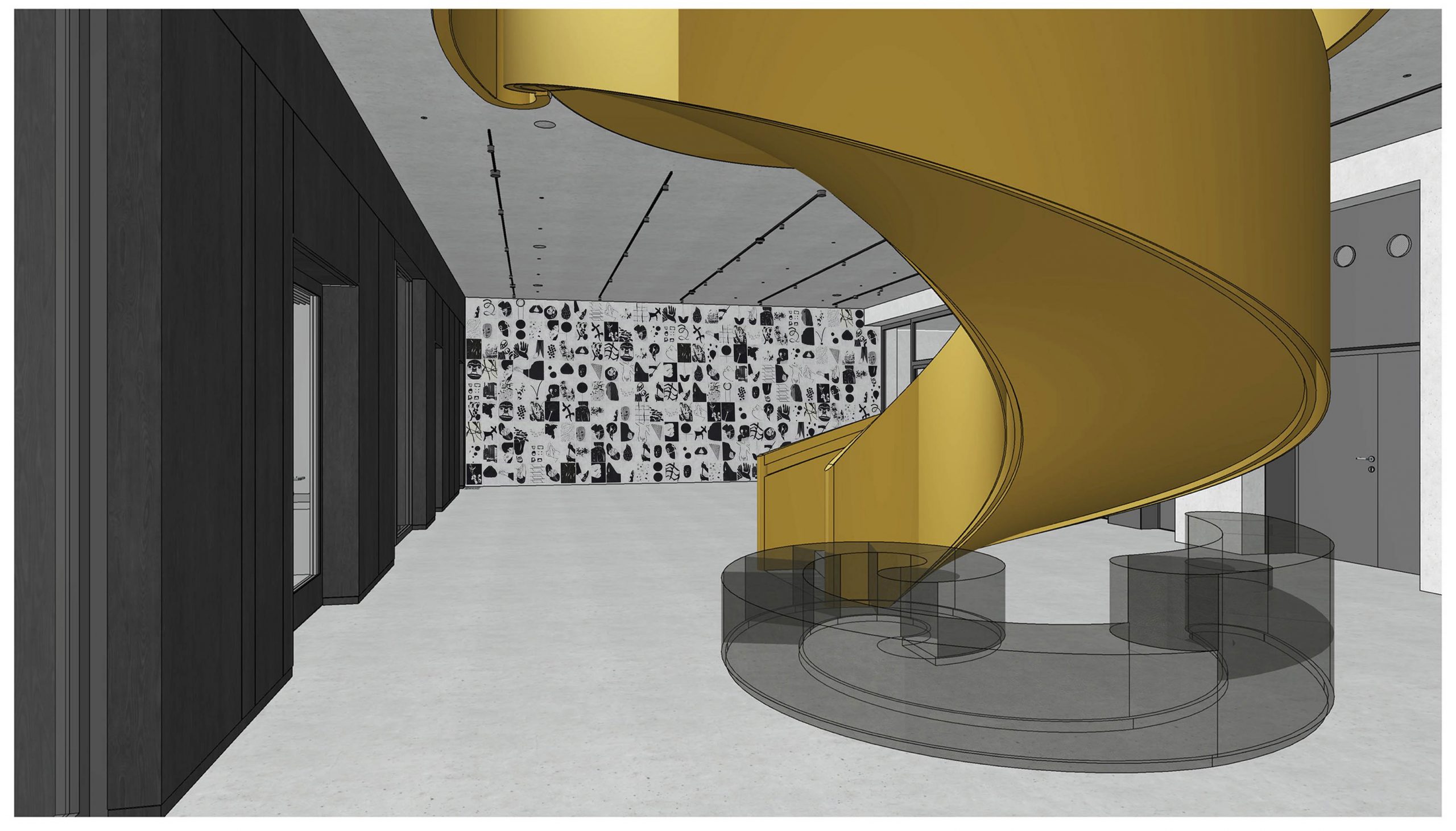
Images: Mockup of the foyer of the Elisabeth Selbert House, showing the wall drawing and its digital extension, with excerpts from the drawings