nel bosco serpentara – dancing around the trees
Commissioned work by the Akademie der Künste, Berlin for the anniversary publication of Villa Serpentara // Editors: Clara Herrmann and Anneka Metzger, on behalf of the Akademie der Künste, Berlin, 2024
In responding to the commission by the Akademie der Künste, Berlin to develop a visual chronology of Villa Serpentara, I became interested in the question of which forms of transmission are precisely absent from the historical records preserved in archives, and how these omissions might be made visible and set into relation through artistic practice.
Rather than addressing the highly bureaucratic, almost exclusively male-authored, and at times racist legacy — starting from a German romanticising gaze upon a poverty-stricken Italy of the nineteenth century — as a matter of personal critique, I was interested in working through other voices.
By drawing on divergent perspectives and employing methods that deviate from normative archival practice, I sought to open up the possibility of telling another history of Villa Serpentara.
From this, I developed a multi-layered work:
self-designed artist’s booklet
conceived and realised by me, as a supplement to the anniversary publication „Im Schlangenhain. Nella Serpentara“
Frottages / spatial installation
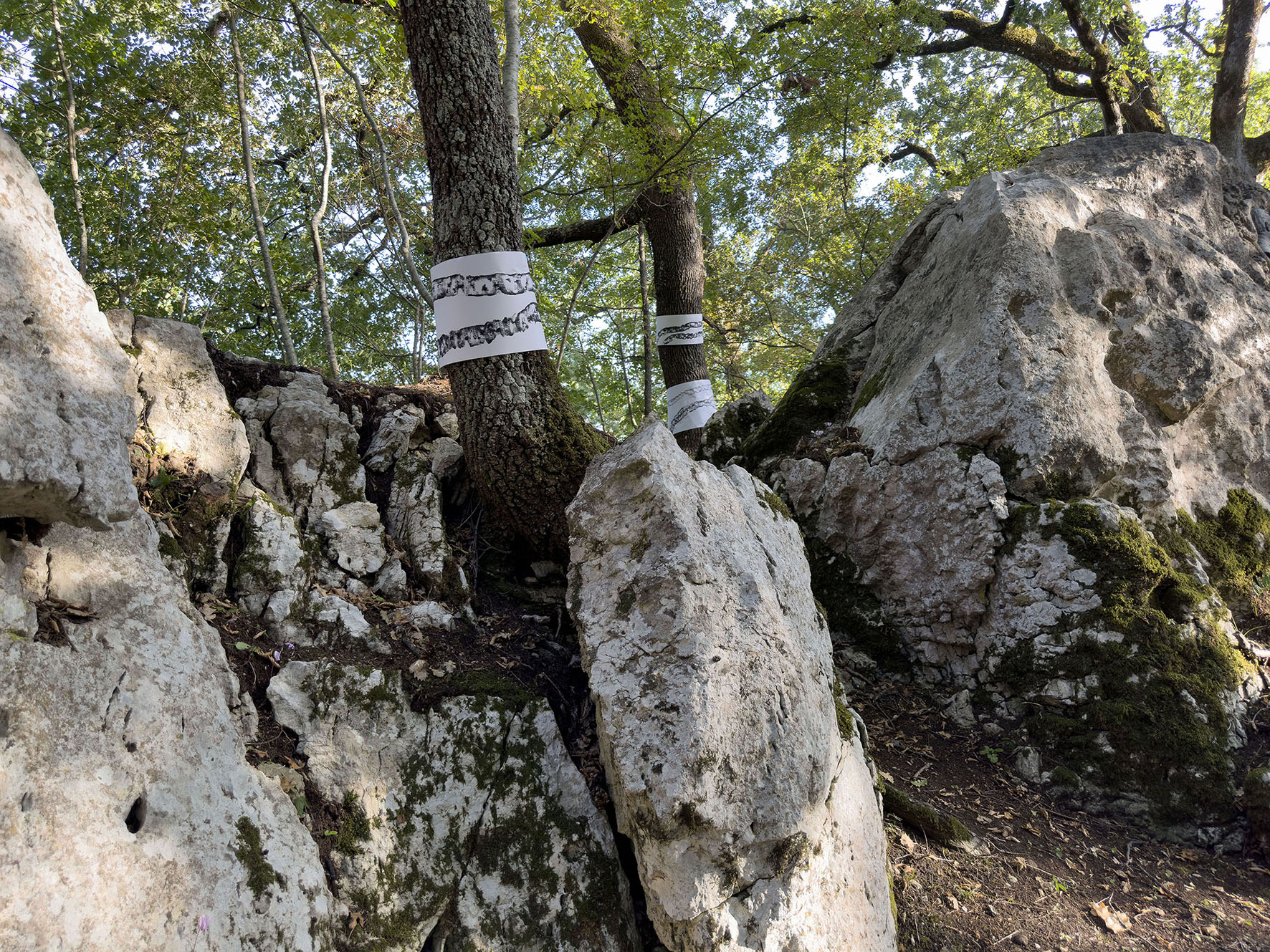
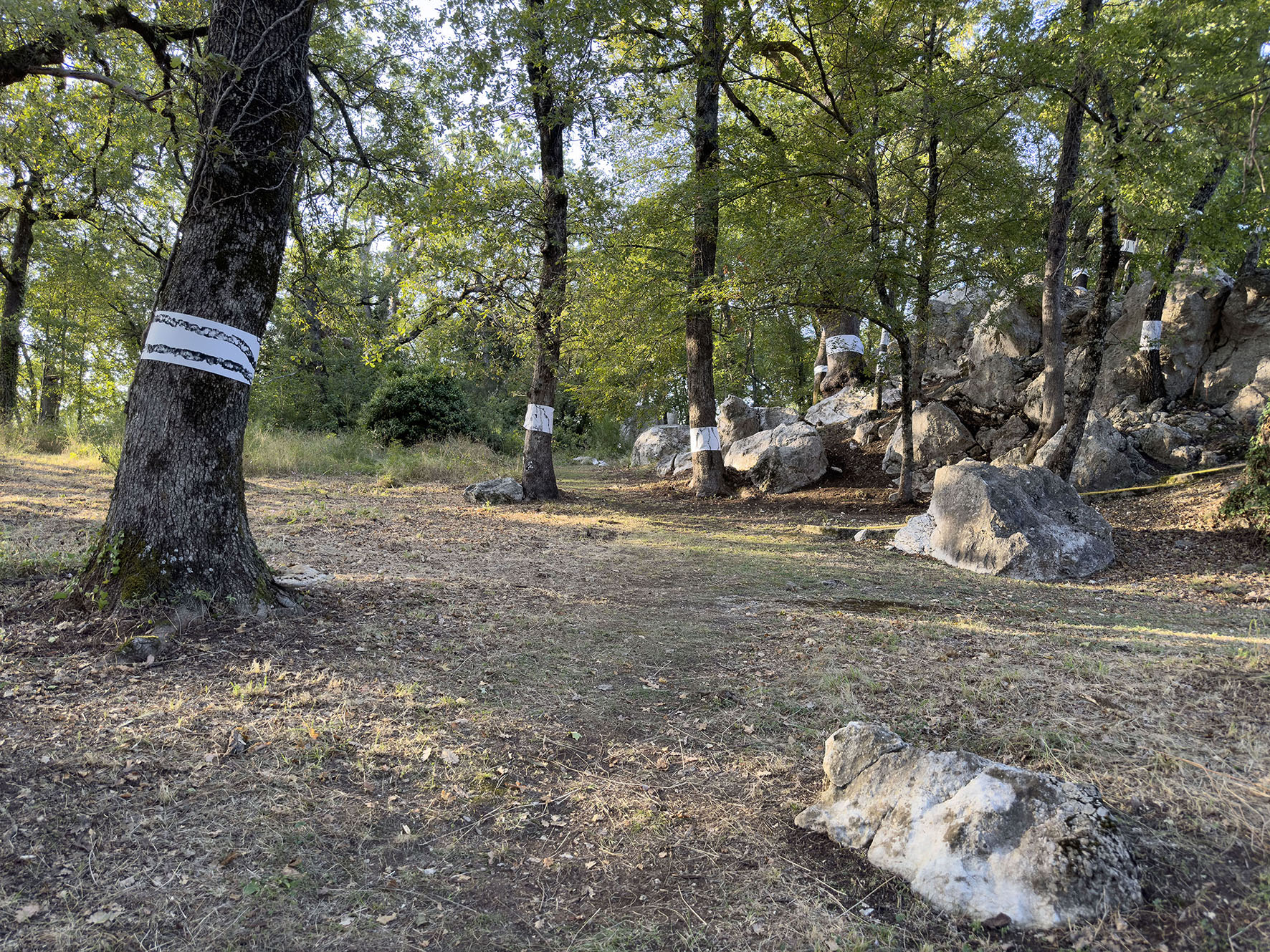
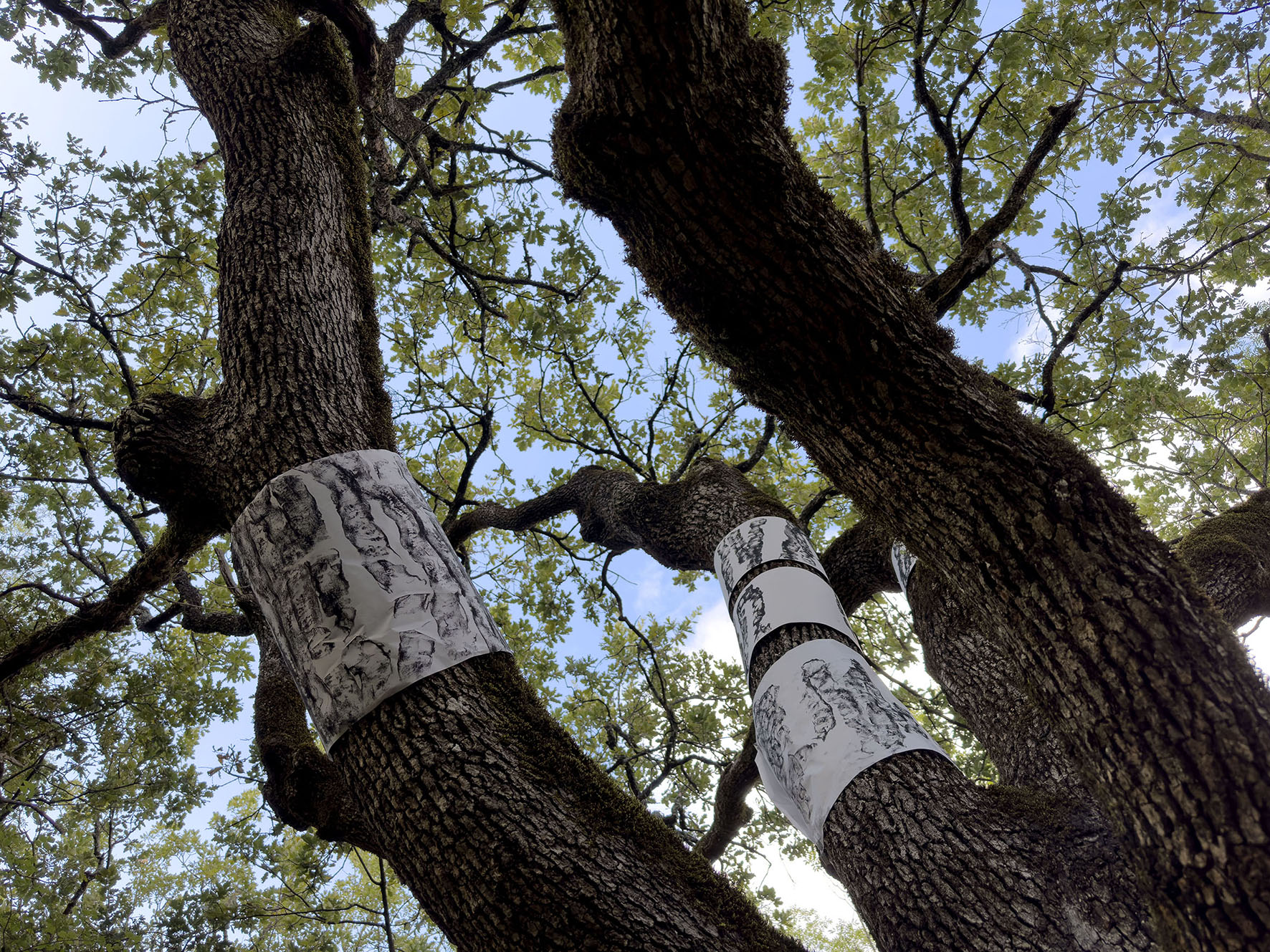
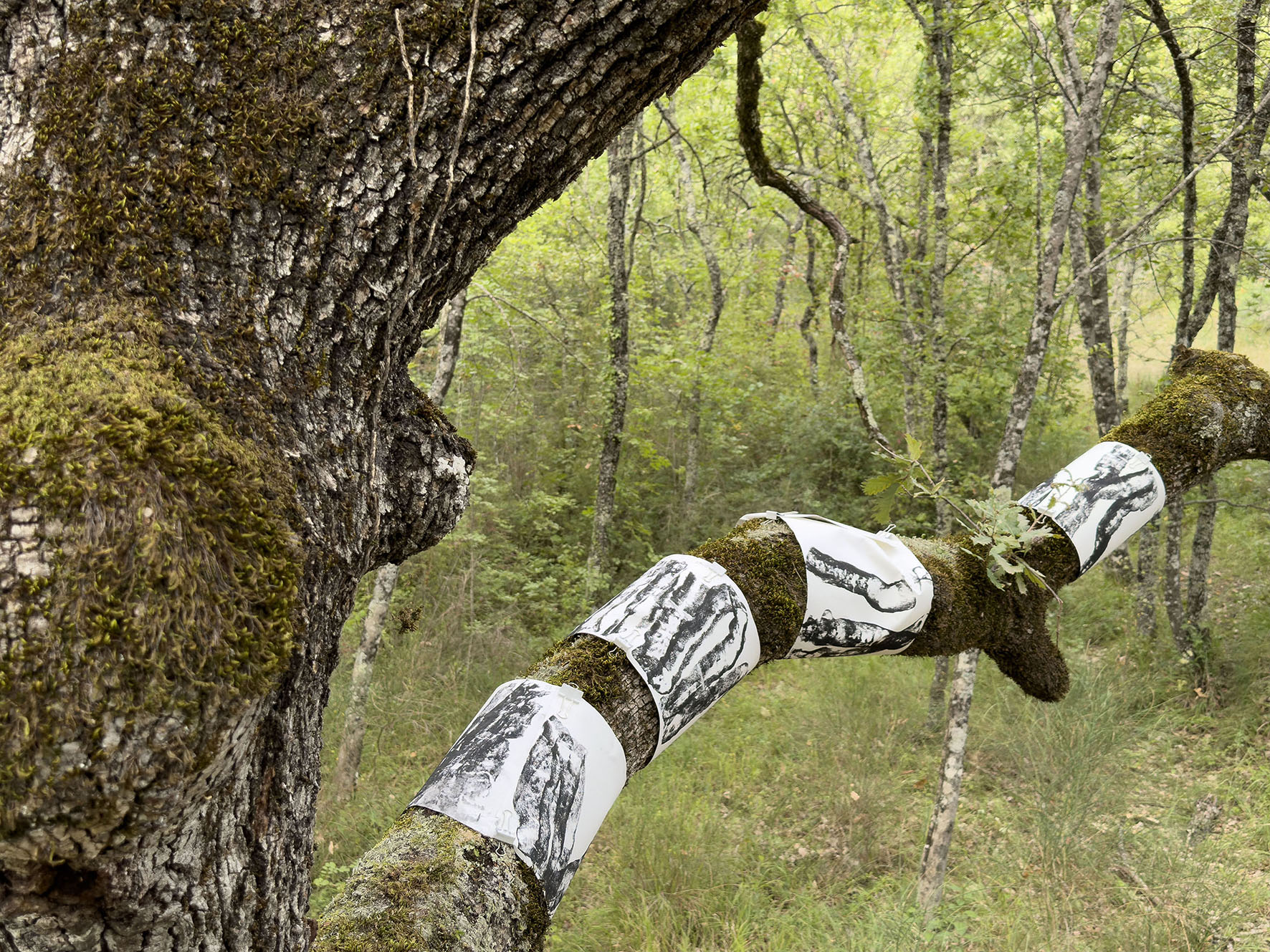
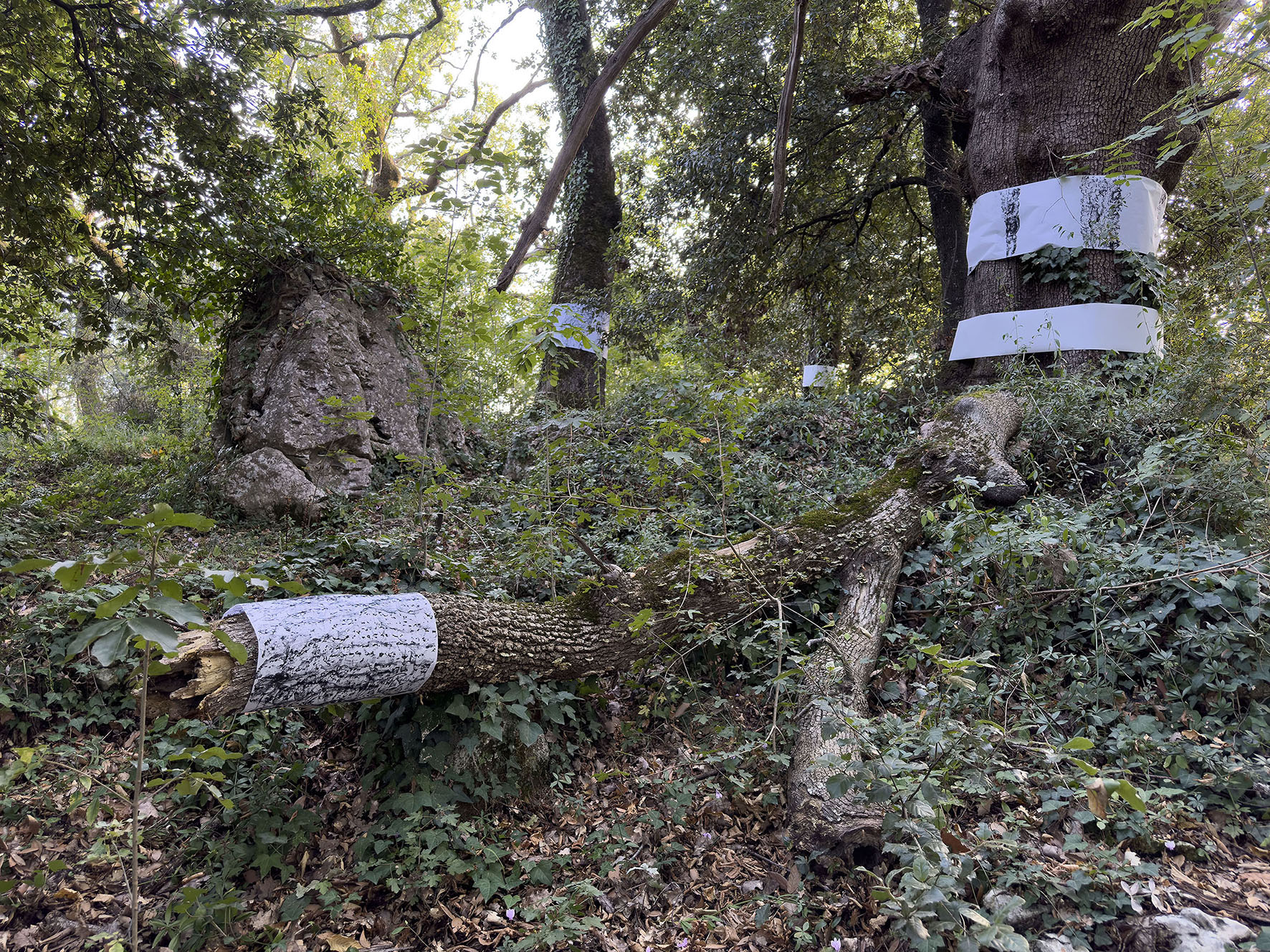
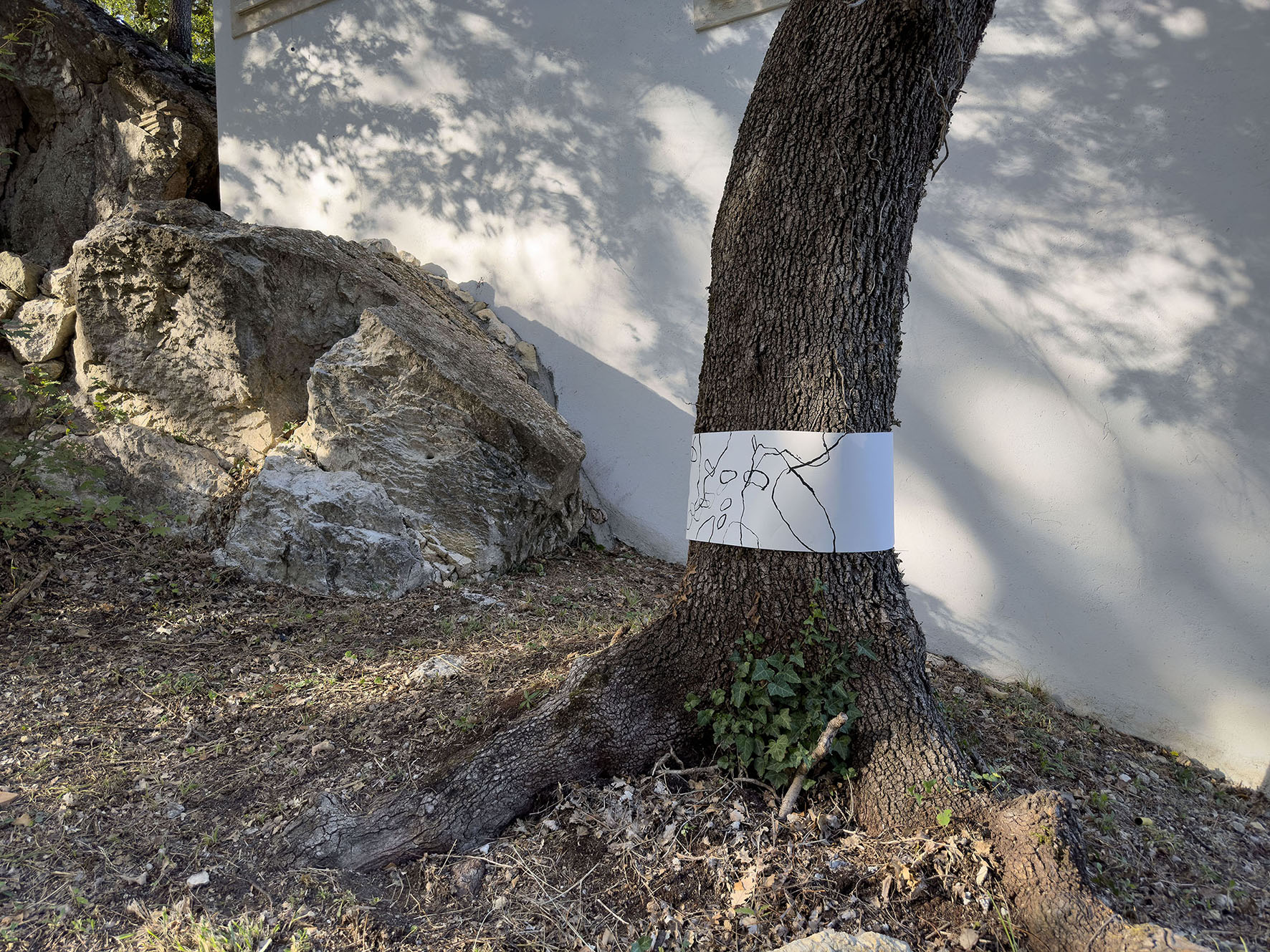
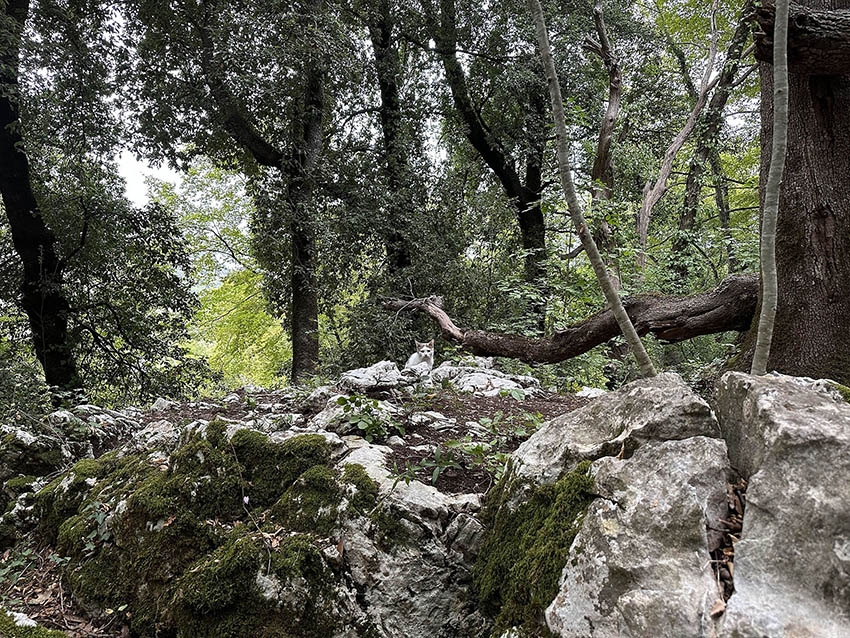
In conversations with practitioners of nature communication, I addressed the ancient oaks of the forest surrounding the villa, asking them for their stories. I translated this dialogue visually into frottages of tree bark, which seem to carry a secret language. Quotations from fellows vs. the historical files. –> installation views
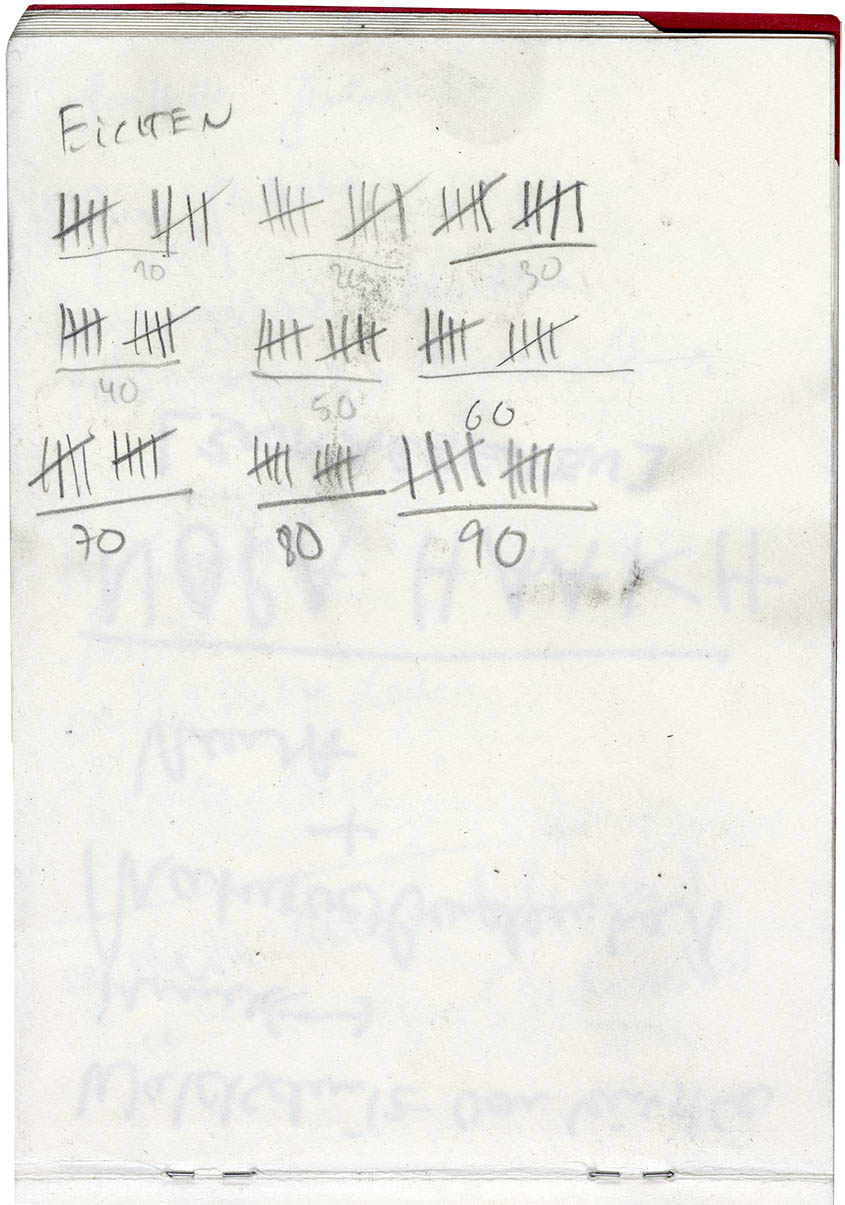
Inventory Drawings — forest / archive
To attend more closely to the forest as a reservoir of knowledge, I apply the method of Inventory Drawings that I developed for archival research both to the photographic material in the archive and to the forest itself. –> more here
Quotations from fellows vs. the historical files
In addition, I invited more than 60 former fellows/residents of Villa Serpentara (1974–2023) to share their impressions, and incorporated these on equal terms with quotations I extracted from over 1,000 archival documents into the chronology (1897–1976). Their differentiation can only be traced through an extensive footnote system within the publication. The selection of archival materials followed a personal desire to draw out another language from them: fragmentary sentence parts that begin to tell their own histories, only to be reconfigured again — in a process of linguistic compression and displacement, akin to the opacity that accompanies every act of archival extraction. –> publication